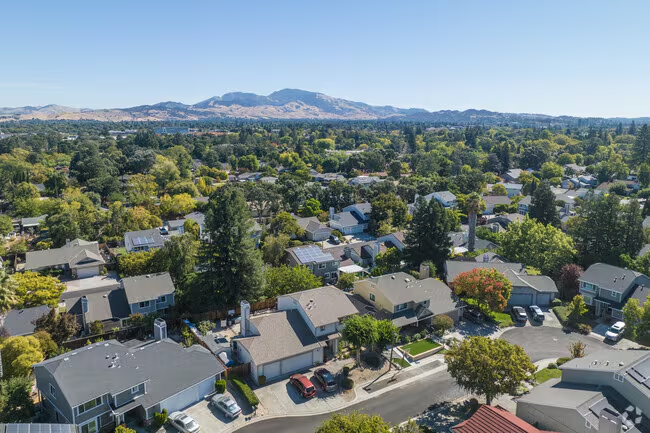
New Housing Developments Bringing Growth to Pleasant Hill
If you’ve spent any time in Pleasant Hill lately, you’ve probably noticed something. The city is changing.
New neighborhoods are popping up. Older areas are being updated. More families are moving in. And businesses are paying attention.
Pleasant Hill has always had a quieter, more relaxed feel compared to some of the faster-growing cities nearby. But that’s part of why people are looking at it now. Buyers want space, good schools, easier commutes, and a community that still feels connected.
A lot of the recent growth comes down to housing.
New developments are creating more options for buyers while also bringing new energy into the area. That growth affects property values, local businesses, traffic patterns, schools, and the overall feel of the community.
If you’re thinking about buying, selling, or investing in Pleasant Hill, it helps to understand what’s actually happening on the ground.
Why Pleasant Hill Is Growing
Pleasant Hill sits in a spot that makes sense for a lot of people.
You can get to larger job centers without feeling like you live in the middle of nonstop traffic and congestion. That balance matters more now than it did a few years ago.
A lot of buyers are looking for:
More space
Newer homes
Safer neighborhoods
Better schools
Lower stress day-to-day living
Pleasant Hill checks a lot of those boxes.
And when demand rises, builders respond.
That’s why you’re seeing more residential construction, mixed-use developments, and neighborhood expansion throughout the area.
Some buyers are relocating from larger metro areas. Others are moving up from starter homes and want something newer without leaving the region completely.
It’s not just one type of buyer anymore.
New Construction Is Bringing More Housing Choices
One of the biggest shifts in Pleasant Hill is the variety of housing being built.
For a while, buyers had limited choices. Most available homes were resale properties, and inventory stayed tight.
Now there are more options.
You’ll find:
Single-family homes
Townhomes
Planned communities
Low-maintenance properties
Homes with modern layouts and energy-efficient features
That matters because different buyers need different things.
A first-time buyer may want something smaller and manageable. A growing family may need extra bedrooms and a yard. Downsizers may want newer construction without the upkeep of an older home.
The newer developments help fill those gaps.
And honestly, buyers notice the difference when they walk into a newer home. Open layouts, larger kitchens, home offices, better storage, and updated materials still carry a lot of weight.
Local Businesses Benefit From Population Growth
Housing growth usually creates a ripple effect across the city.
As more people move into Pleasant Hill, demand increases for:
Restaurants
Coffee shops
Grocery stores
Medical offices
Gyms
Retail centers
Service businesses
That growth helps support the local economy.
You start seeing more investment in commercial spaces, road improvements, and community upgrades. Some areas become more walkable and connected over time.
It also creates jobs locally, which can help stabilize the market long-term.
That’s one reason many homeowners pay close attention to development projects nearby. Growth can increase convenience and improve overall desirability in certain parts of town.
Of course, not every resident loves rapid growth. Some worry about traffic or overcrowding. That conversation happens in almost every growing city.
Still, controlled development tends to be healthier than stagnation.
What This Means for Home Values
A lot of homeowners ask the same question:
“Will new construction hurt resale values?”
Usually, in a healthy market, the opposite happens.
When an area attracts new development, it often signals confidence from builders and investors. That attention can increase buyer demand across the entire city.
New infrastructure, updated amenities, and population growth can all support long-term property values.
That said, pricing still depends on:
Location
School districts
Neighborhood appeal
Home condition
Inventory levels
Interest rates
Not every home appreciates at the same pace.
But overall, growing cities tend to stay more visible to buyers, and visibility matters.
Pleasant Hill Still Feels Like Pleasant Hill
One thing buyers like about Pleasant Hill is that growth hasn’t completely changed the character of the community.
It still feels approachable.
People know their neighbors. Parks stay active. Schools and community events still play a big role in daily life.
That balance is hard to maintain when a city grows quickly, but Pleasant Hill has managed to keep a lot of its original appeal while still expanding.
For many buyers, that’s the sweet spot.
You get newer housing opportunities without feeling like you’re moving into an overcrowded urban center.
Buyers Are Watching Inventory Closely
New developments also affect competition.
When inventory is low, buyers often compete aggressively for resale homes. New construction can help relieve some of that pressure.
But in desirable areas, demand still moves quickly.
Some buyers prefer new homes because they want fewer repairs and modern features. Others still prefer established neighborhoods with mature trees and larger lots because new construction and older homes both offer different advantages.
There’s no universal answer.
The key is understanding what fits your goals, budget, and timeline.
That’s especially important if you’re relocating into the area and don’t know which neighborhoods are changing the fastest.
A Real-World Example
Say a family relocates to Pleasant Hill from a larger nearby city.
They’re tired of traffic, cramped neighborhoods, and older housing inventory that needs work.
They start looking at newer developments because they want:
More square footage
Better schools
A quieter environment
Space for remote work
They may spend slightly more upfront for new construction, but they also reduce immediate maintenance costs and get features that fit modern living better.
That’s becoming a pretty common story.
Another buyer may go the opposite direction and target an older neighborhood near newer developments. Why?
Because nearby growth can still increase long-term demand while offering a lower purchase price upfront.
Different strategies work for different buyers.
Things Buyers Should Pay Attention To
If you’re considering a home in a developing area of Pleasant Hill, pay attention to more than just the house itself.
Look at:
Future Development Plans
What’s being built nearby over the next few years?
A quiet road today may look very different later.
School Capacity
Growing populations can affect schools over time.
Traffic Patterns
Some areas improve with infrastructure updates. Others get busier faster than expected.
HOA Rules
Many newer communities include homeowners associations. Read the details carefully.
Property Taxes
New construction sometimes comes with higher tax assessments.
Little details matter more than people think.
Before signing a contract, buyers considering a brand-new home should understand the building process upfront so there are fewer surprises during construction and closing.
Is Pleasant Hill a Good Place to Buy Right Now?
For many buyers, yes.
Pleasant Hill offers a mix of:
Community feel
Growth potential
New housing options
Access to nearby employment areas
Lifestyle appeal
That combination keeps attracting attention.
The market will always shift over time. Interest rates change. Inventory changes. Buyer behavior changes too.
But cities that continue investing in housing and infrastructure usually stay relevant longer.
Pleasant Hill appears to be moving in that direction.
For relocating families, the process of buying a newly built home can feel very different from purchasing a resale property, especially when timelines and builder upgrades are involved.
Frequently Asked Questions
Are new housing developments increasing home prices in Pleasant Hill?
In many cases, growth and demand can support rising property values, especially in desirable neighborhoods with strong amenities and schools.
Are there still resale homes available in Pleasant Hill?
Yes. Buyers can still find existing homes in established neighborhoods alongside newer construction communities.
Is Pleasant Hill good for families?
Many buyers are drawn to Pleasant Hill for its community feel, schools, parks, and quieter pace compared to larger surrounding cities.
Do new developments help the local economy?
Usually, yes. Population growth often supports local businesses, job creation, and infrastructure improvements.
Should buyers choose new construction or older homes?
It depends on your priorities. Some buyers want modern layouts and lower maintenance. Others prefer established neighborhoods and larger lots.
Final Thoughts
Pleasant Hill’s growth isn’t happening by accident.
People are choosing the area because it offers something a lot of buyers want right now. More space. More balance. More housing options. A strong sense of community.
New housing developments are a big part of that story.
If you’re thinking about buying or selling in Pleasant Hill, understanding where growth is happening can help you make a smarter decision.
And honestly, markets tend to reward cities that continue evolving while still keeping their identity intact. Pleasant Hill seems to be doing both.
Have questions about buying or selling in the East Bay?
Let’s look at this together. Call or text Jessica at (925) 354-9408, or send a message
